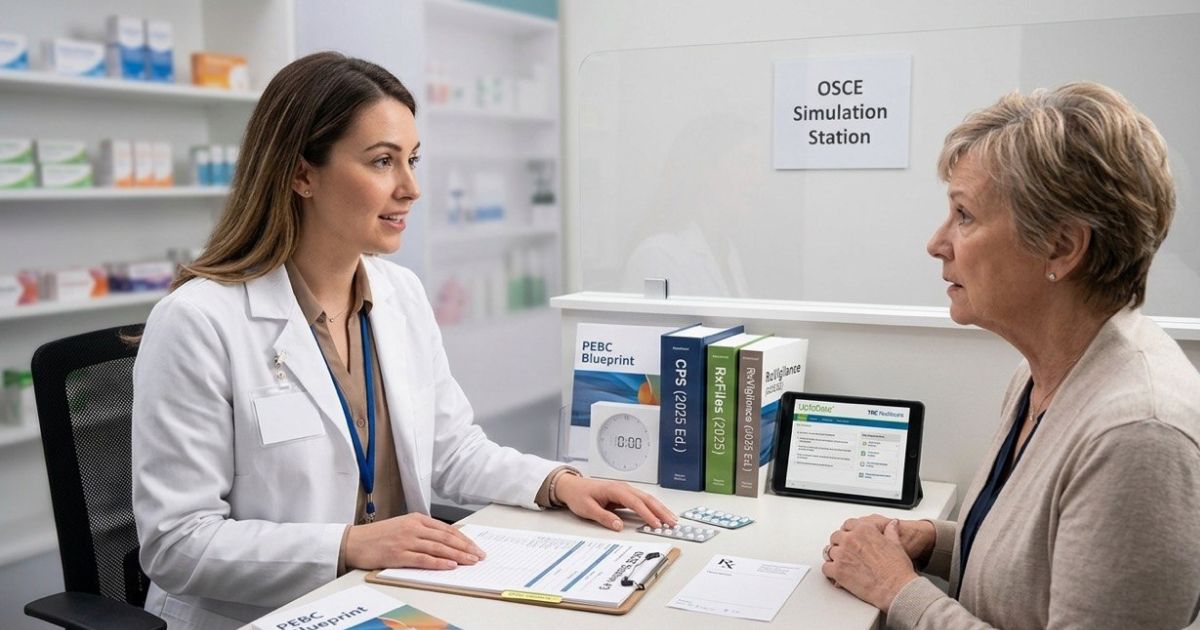
Whether you are an internationally trained pharmacist or a Canadian graduate, the OSCE is one of the most unique and challenging steps on your path to licensure in Canada. This guide covers everything candidates typically search for before the exam, from registration and costs to station types, study strategies, and exam day tips.
Registration, Exam Dates, and Costs
The first step in your OSCE journey is understanding when and where the exam is offered. The PEBC Pharmacist Qualifying Examination Part II (OSCE) is typically offered three times per year, in February (not always), May, and November, on a single day across Canada. Morning (AM) or afternoon (PM) sessions are assigned through PEBC's prioritization system. The May sitting offers the widest selection of centres, including Calgary, Edmonton, Halifax, Hamilton, Kingston, London, Montreal, Ottawa, Saskatoon, St. John's, Toronto, Vancouver, Kitchener-Waterloo, and Winnipeg.
You can find up-to-date exam dates, locations, and application deadlines on the PEBC Examination Dates and Fees page. The exam is available in English or French. Montreal is typically the designated French-language centre. As of 2026, the fee for the Qualifying Examination Part II (OSCE) is $1,915 CAD, payable online by Visa or MasterCard. PEBC reserves the right to cancel the exam at any location if there are insufficient applicants, so registering early is strongly advised.
How to Prepare for the PEBC OSCE with Mock Exam Practice
Preparing for the OSCE is fundamentally different from studying for a written exam like the MCQ. The OSCE, which stands for Objective Structured Clinical Examination, assesses not just your clinical knowledge but your ability to apply it in real time under pressure. Successful candidates work on communication skills, time management, critical thinking, problem-solving, scene management, and overall clinical performance.
Your preparation should be organized around the PEBC Qualifying Examination Blueprint, which outlines the competency areas covered in the exam. High-quality, structured practice is far more valuable than simply reviewing theory. Some stations are open-book, meaning references are provided when deemed essential to solving the task. According to the PEBC, the main references used are CPS, RxVigilance, RxFiles, UpToDate, TRC Healthcare, and the Merck Manual. Familiarity with these resources is critical, as you need to navigate them quickly under timed conditions. Not all stations include references, so strong foundational knowledge is equally important.
Types of Stations and How to Approach Them
The PEBC OSCE consists of 11 scored stations, with 9 interactive and 2 non-interactive, plus rest stations. Each station lasts 7 minutes. You will have 2 minutes beforehand to read the Candidate's Instructions posted outside each station door.
Interactive stations involve a Simulated Participant (SP) who may portray a patient, caregiver, or health professional. An assessor inside the room evaluates your communication, clinical decision-making, and professional conduct using a standardized scoring sheet. Read the door note and check station materials as soon as you enter, before the Simulated Participant arrives. Approach each interaction as you would in real practice, gather the information you need, apply your clinical reasoning, communicate clearly, and act in the best interest of the patient.
Non-interactive stations require you to complete written tasks independently, such as screening/verifying new prescriptions, checking dispensed medications, or responding to a drug information request. Bubble answer sheets must be filled in completely and clearly. You must stop writing the moment the stop signal sounds.
The PEBC website provides five downloadable sample stations covering both types. Examples include:
- • Cancer pain control (interactive with a standardized patient)
- • Travellers' diarrhea management (interactive with a standardized patient)
- • Screening new prescriptions (non-interactive, written)
- • Checking prepared medications (non-interactive, written)
- • Warfarin/carbamazepine interaction (interactive with a health professional)
You can download these samples from the PEBC Sample Stations page. Reviewing them is one of the best starting points for understanding what the exam actually feels like.
Finding a Study Group and Practice Partner
One of the most impactful things you can do during OSCE preparation is find a study group or practice partner, especially if you have never experienced a clinical simulation exam before. A small group of two to four people is generally optimal. Group members should ideally be at a similar level of knowledge and skill so that everyone benefits equally from the sessions. Thanks to modern technology, location is no longer a barrier, and effective practice sessions can be held online through platforms like Zoom or Microsoft Teams.
Having a tutor or coach adds significant value. A knowledgeable tutor can guide your preparation, provide structured feedback, identify your weak areas, and track your progress over time. PEBC OSCE mock exams, which are simulated full OSCE sessions run under timed and exam-like conditions, are also invaluable for testing your readiness before the real pharmacy OSCE exam.
Learning from Other Candidates' Experiences
Talking to candidates who have already written the OSCE can be helpful, but approach these conversations carefully. Their insights are genuinely useful for understanding how to prepare, which courses or resources worked for them, and what the general exam environment feels like. However, be cautious about relying on their accounts of specific station content, passing grades, or what they believe caused them to pass or fail. The OSCE is standardized and individual experiences vary significantly. Focusing too much on others' specific outcomes can create unnecessary stress and misconceptions. Use peer experiences as one source of information, not as your primary guide.
Exam Day Tips
Expect to be at the exam centre for approximately 6.5 hours. Make sure you have the following ready:
- • Your printed PEBC Admission Card (emailed approximately 3 weeks before the exam; electronic copies are not accepted)
- • Original government-issued photo ID such as a passport, provincial driver's licence, health card, or permanent resident card
- • A plain lab coat or scrubs with all logos and identifiers removed or covered with opaque tape
- • Water in a clear, unlabelled plastic bottle and nut-free snacks in a separate Ziploc bag
Leave jewelry at home to avoid delays at registration. Do not wear scented cosmetics or perfumes, as you may be refused entry. Arrive on time because candidates arriving more than 30 minutes late may not be permitted to enter. Make all transportation arrangements before entering the secure examination area, as no phone use is permitted once inside.
Exam Rules to Know
Understanding the rules before exam day is essential. Violations can result in warnings, removal from the exam, or cancellation of results. Key rules include:
- • No communication with other candidates at any time, in any language, including during rest stations and breaks
- • No writing on station materials or references; any pencil mark, circle, or underline is considered a breach
- • Follow all timing signals exactly; stay in the station for the full 7 minutes even if you finish early, and stop immediately when the stop signal sounds
- • No prohibited items or electronic devices are permitted in the secure examination area
- • Exam confidentiality must be maintained after leaving the exam centre, as agreed in the Candidate's Agreement
Final Thoughts
The PEBC OSCE is a rigorous but very passable exam when you prepare strategically. Start by checking dates and registering early, build your clinical knowledge around the exam blueprint, practice regularly with a group or tutor, and review the official PEBC sample stations. If you are looking for a flexible and accessible way to add mock exam practice to your routine, Dosette is an OSCE preparation platform for Canadian pharmacy candidates. It offers timed, PEBC-aligned mock stations with interactive examiner and patient conversations that respond to your answers the way a real simulated participant would.
After each station, you receive instant competency-based feedback and a detailed performance report, so you always know where you stand and what to work on. It is available 24/7, requires no travel or study partners to get started, and tracks your progress over time across all NAPRA competency areas. It is not a replacement for deep clinical study or group practice, but as a tool to sharpen your performance and build confidence before exam day, it is worth exploring. Good luck. Your preparation starts now.
Hassan Torkamandi, PharmD, RPh
CEO, Simulabs Technologies Inc.