Scenario Overview
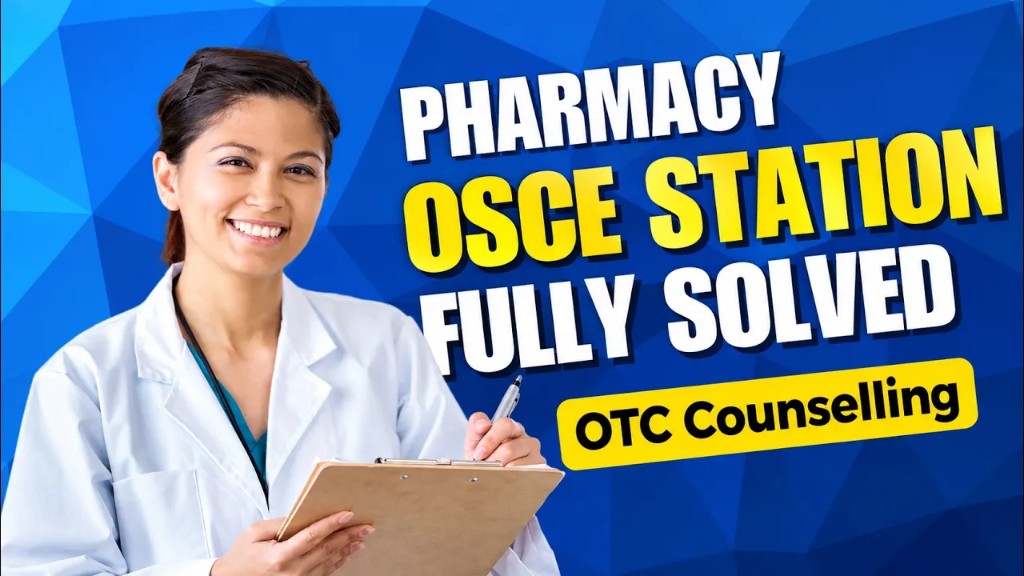
In this station, a 22-year-old patient approaches the pharmacy counter for help with breakouts. She mentions ongoing acne and makeup use, and is looking for practical over-the-counter advice.
The key objectives are to:
- • Gather a focused OTC history (onset, severity, products tried, allergies, and red flags)
- • Recommend an evidence-based first-line option such as benzoyl peroxide when appropriate
- • Counsel on correct use, irritation management, and habits that worsen acne (including over-washing)
- • Set realistic expectations — improvement often takes 6 to 8 weeks — and advise when to seek follow-up
Why This Station Matters
OTC counselling looks simple, but examiners watch for structured information gathering, safe product selection, and clear patient education. A high-scoring candidate balances clinical reasoning with empathy: confirming the presentation is suitable for self-care, explaining how the product works, and helping the patient use it correctly without over-treating or irritating the skin.
Example of a Fully Solved Response
A strong candidate might structure the conversation as follows:
"Hi, thanks for coming in. I'd like to ask a few questions so I can recommend something safe and useful. How long have you been dealing with the breakouts, where are they located, and have you tried any products already? Also, any allergies, other skin conditions, or medications I should know about?"
[After gathering history and ruling out red flags]
"For mild acne like this, benzoyl peroxide is a good over-the-counter starting point. Start with a lower strength, apply a thin layer to clean, dry skin once daily, and increase gradually if tolerated. It can bleach fabrics, so be careful with towels and pillowcases. Mild dryness or redness is common at first — if that happens, use a gentle moisturizer and reduce how often you apply it."
"Try not to over-wash or scrub the skin, and keep makeup non-comedogenic if you can. Results usually take about 6 to 8 weeks of consistent use, so patience matters. If there is no improvement, the acne worsens, or you develop painful cysts or scarring, come back and we can discuss next steps or a referral."
Notice how the response is organized: history first, then recommendation, counselling points, lifestyle advice, expectations, and follow-up. That structure supports a fully solved performance across communication, clinical outcome, and overall performance.
Key Components of a High-Scoring Response
Communication: Professional greeting, logical questions, and plain-language explanations. Show empathy about appearance concerns without rushing the patient.
Outcome: Confirm suitability for self-care, recommend an appropriate OTC option, and cover use, precautions, skincare habits, timelines, and when to return.
Performance: Demonstrate clinical reasoning and patient safety — screen for red flags, avoid over-treatment, and set realistic expectations rather than promising quick results.
Common Pitfalls
Candidates often lose marks by:
- • Jumping to a product recommendation without gathering history or checking red flags
- • Omitting counselling on benzoyl peroxide irritation, bleaching risk, or gradual introduction
- • Failing to address over-washing, makeup habits, or other contributing factors
- • Promising fast results instead of explaining the 6-to-8-week timeline
- • Skipping follow-up advice or referral criteria
Key Takeaway
In OTC stations, product knowledge alone is not enough. Examiners want to see a complete counselling process: assess, recommend, educate, and arrange follow-up. By guiding the patient on benzoyl peroxide use, discouraging over-washing, and setting a realistic 6-to-8-week expectation, you demonstrate the communication and clinical judgment expected for a fully solved OSCE score.
Watch the walkthrough below to see how these points come together in a realistic pharmacist–patient consultation.
Watch the Video Tutorial
Watch on YouTube: Pharmacy OSCE | Interactive OTC Station — Walkthrough + Perfect Answer � Simulabs AI on YouTube
Disclaimer
This content is not intended as a practice reference or clinical treatment resource. It is designed solely to enhance pharmacists' knowledge and skills for the purpose of preparing for pharmacy examinations. This video is not a substitute for current clinical guidelines and should not be used as a reference for patient care or clinical practice.
Please note that some of the information presented may differ slightly from guidelines in different countries or from routine clinical treatment practices. Always refer to the applicable, up-to-date clinical guidelines and local protocols when making clinical decisions.
Hassan Torkamandi, PharmD, RPh
CEO, Simulabs Technologies Inc.
Ready to Master Interactive OSCE Stations?
Practice with our interactive mock exams featuring realistic OTC and patient counselling scenarios with detailed feedback.
Start Your Practice